Reliable operation at critical water temperatures
Large-scale heat pumps that are used, for example, in the district heating supply are increasingly drawing on surface water from rivers, lakes, or the sea as a sustainable heat source. In order to optimally utilize the available heat, as much energy as possible is taken from the water in the evaporator. Operation close to freezing point is particularly attractive from an energy point of view, but it also increases the risk of icing on the heat transfer surfaces. This risk becomes critical at water temperatures of below around 4°C, because individual surface areas in the heat exchanger can cool down to 0°C or below, which then leads to the formation of ice. Ice crystals form on the cold surfaces and slowly grow to form an insulating layer. This icing impairs the transfer of heat, reduces the coefficient of performance (COP), and may eventually lead to a blockage in the heat exchanger. This can result in unplanned shutdowns, reduced efficiency, and a greater need for back-up fossil fuel systems in cold weather. The water temperatures in many rivers in Central and Northern Europe are often within this critical range for many hours per year – precisely when the demand for heat is at its greatest.
Our solution: Klaren heat exchanger
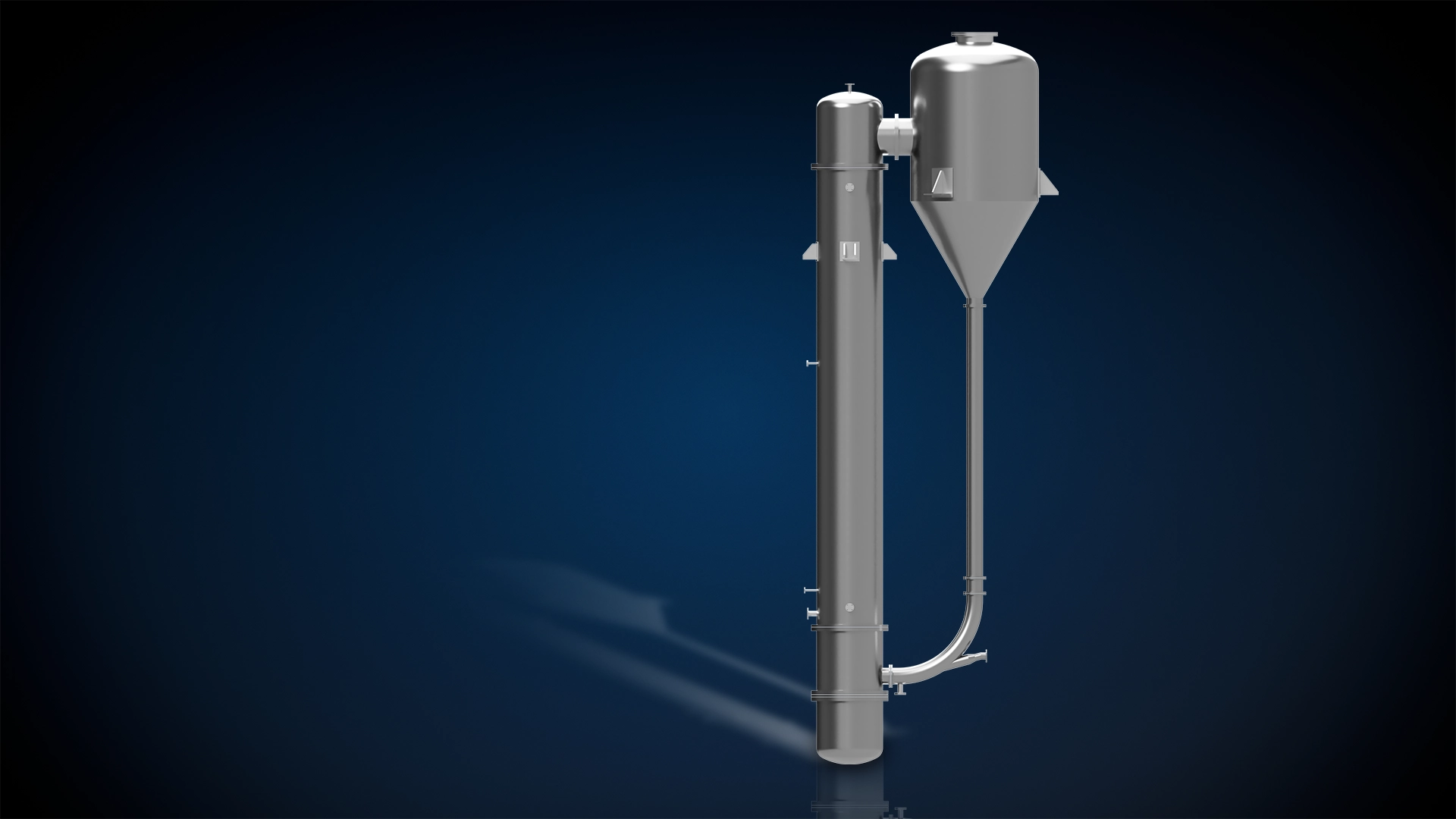
The self-cleaning heat exchanger proactively prevents the formation of ice. On the tube side, the process medium flows together with special cleaning particles upwards from below through the tubes, where the cleaning particles form a fluidized bed. They are kept in controlled motion by the flow and generate a continuous, gentle scouring action along the tube inner walls. In the process, any forming ice crystals are removed immediately before they can form a continuous layer of ice. At the same time, dirt, biofilm, and other deposits are reduced. The heat transfer surfaces remain exposed, meaning that stable operation is ensured even at water temperatures close to freezing point. This has a direct effect on the performance of the heat pump: The coefficient of performance remains at a constantly high level, while the temperature difference between the heat source and heat pump can be utilized better. As a result, efficient and uninterrupted heat extraction is possible even with very cold surface water.
Field-tested under real winter conditions
TAPROGGE Products
In the Überseeinsel Bremen project, Klaren heat exchangers enabled reliable heat recovery from the Weser river even at very low water temperatures. The heat is initially transferred to an intermediate medium, which then supplies the evaporator of the heat pump. This keeps operation stable and efficient – without icing and without time-consuming defrost cycles.

High availability. Reliable heat.
For owners, this means high plant availability on days when the demand for heat is particularly high, and also translates to lower operating and maintenance costs as well as a reliable, climate-friendly heat supply. The Klaren heat exchanger turns heat pump systems that use surface water into a robust solution for the industrial and municipal heat supply (district heating) – even under challenging winter conditions.