Managing fouling and utilizing waste heat
Textile fabric manufacturing uses up a lot of water while producing wastewater with a very high salt content and sometimes high levels of organic pollution. This wastewater would overload public sewage treatment plants. Therefore, the manufacturers themselves must deal with it. This is done under the strict guidelines of zero liquid discharge (ZLD): from reducing the amount of wastewater to completely eliminating wastewater discharge. The wastewater must be treated and reused at the manufacturer’s premises, and the impurities must be converted into concentrates or solids and disposed of as solids. By following this approach, legal requirements can be complied with, process reliability increases, and freshwater and wastewater costs are reduced.
How does zero liquid discharge work?
ZLD in fabric dye manufacturing typically takes place in multiple stages: Firstly, the wastewater is pretreated, for example using biological methods or filtration. Secondly, membrane methods such as ultrafiltration (UF), nanofiltration (NF), and reverse osmosis (RO) are used. Finally, polishing takes place depending on the composition of the dyes and organic impurities.
Fouling and scaling
Taprogge Solutions
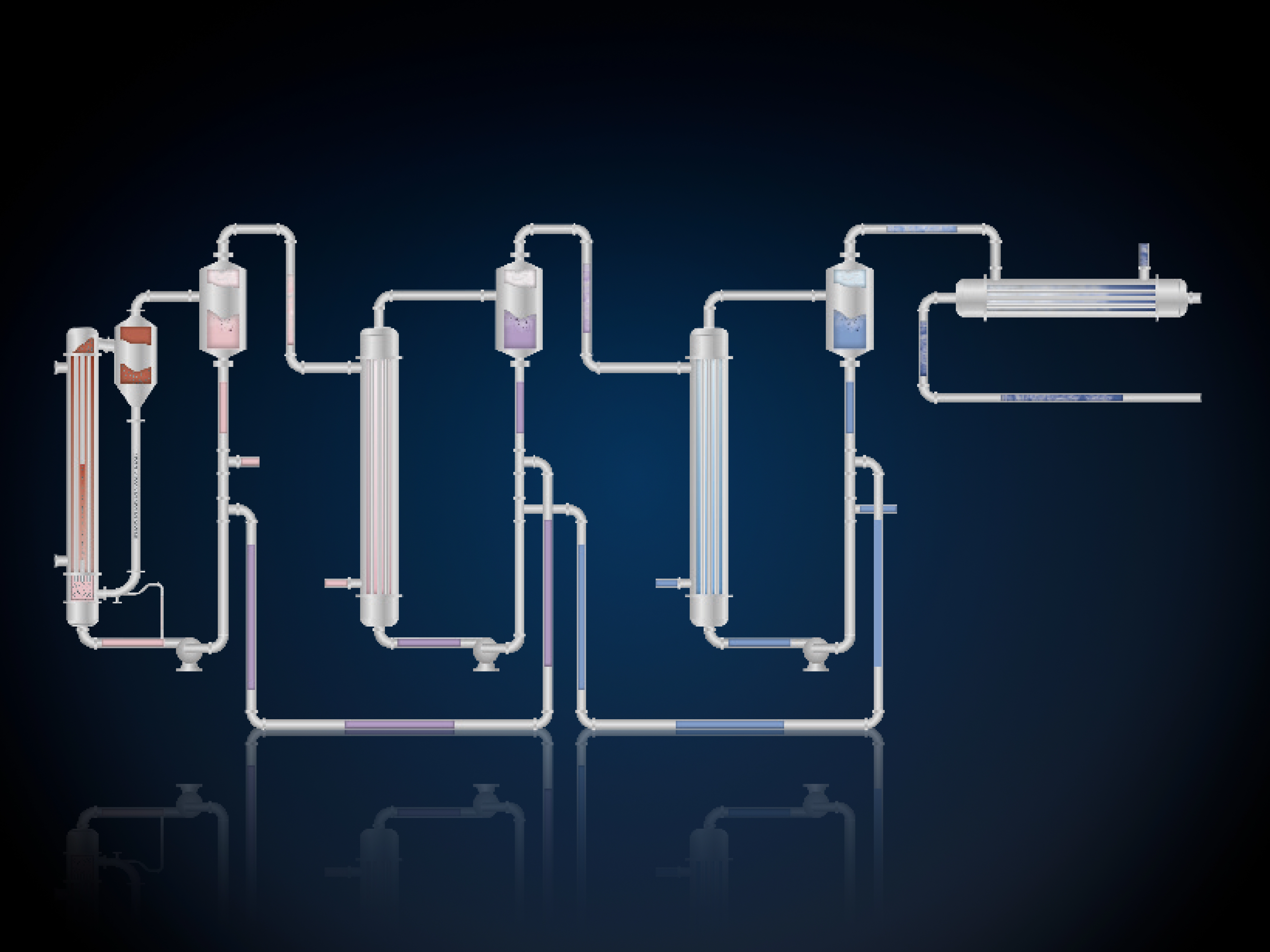
The final thermal stage is often the choke point in a ZLD system. MEE plants (MEE: multiple-effect evaporator) and MVR plants (MVR: mechanical vapor recompression) concentrate the remaining industrial dye wastewater in order to separate pure water and dry solids (salts). Fouling and scaling often occurs in the evaporators during this process. This reduces the desired heat transfer capacity and plant performance and increases operational expenditures (OPEX) through higher energy consumption and unplanned shutdowns for manually cleaning the evaporators.
ZLD - efficient and robust
Therefore, two factors are particularly important for ZLD in textile dyeing: thermally efficient concentration and stable, uninterrupted operation without a loss of performance due to progressive fouling and unplanned manual cleaning.

The self-cleaning Klaren Evaporator
A fluidized bed of Cleaning Particles circulates with the process medium through the evaporator tubes and continuously removes deposits before they can form stubborn layers. This stabilizes the heat transfer process in MEE and MVR plants and allows for continuous operation over longer periods of time. Depending on the medium and process conditions, almost perfect zero fouling is possible. The result is stable thermal performance, reduced energy consumption, and higher plant availability thanks to fewer unplanned shutdowns and longer operating intervals. Klaren evaporators are already being used in many fabric dyeing plants.