Ensuring clean heat transfer
Deposits on heat transfer surfaces increase energy use, CO₂ emissions, and cleaning work. This is precisely where our cleaning elements come in. They help to ensure continuous, mechanical online cleaning in Taprogge systems and keep heat exchangers performing at a high level. The result is stable operating conditions, higher plant availability, and a measurable improvement in profitability across the lifecycle.
Two principles, two fields of application
Different cleaning elements are used depending on the type of heat exchanger. In classic condenser tube cleaning systems, Taprogge cleaning balls are used to regularly clean the condenser tube inner surfaces. Klaren heat exchangers and Klaren evaporators use a fluidized bed of cleaning particles, which continuously clean the tube inner wall during operation and prevent fouling at an early stage.
Cleaning Balls
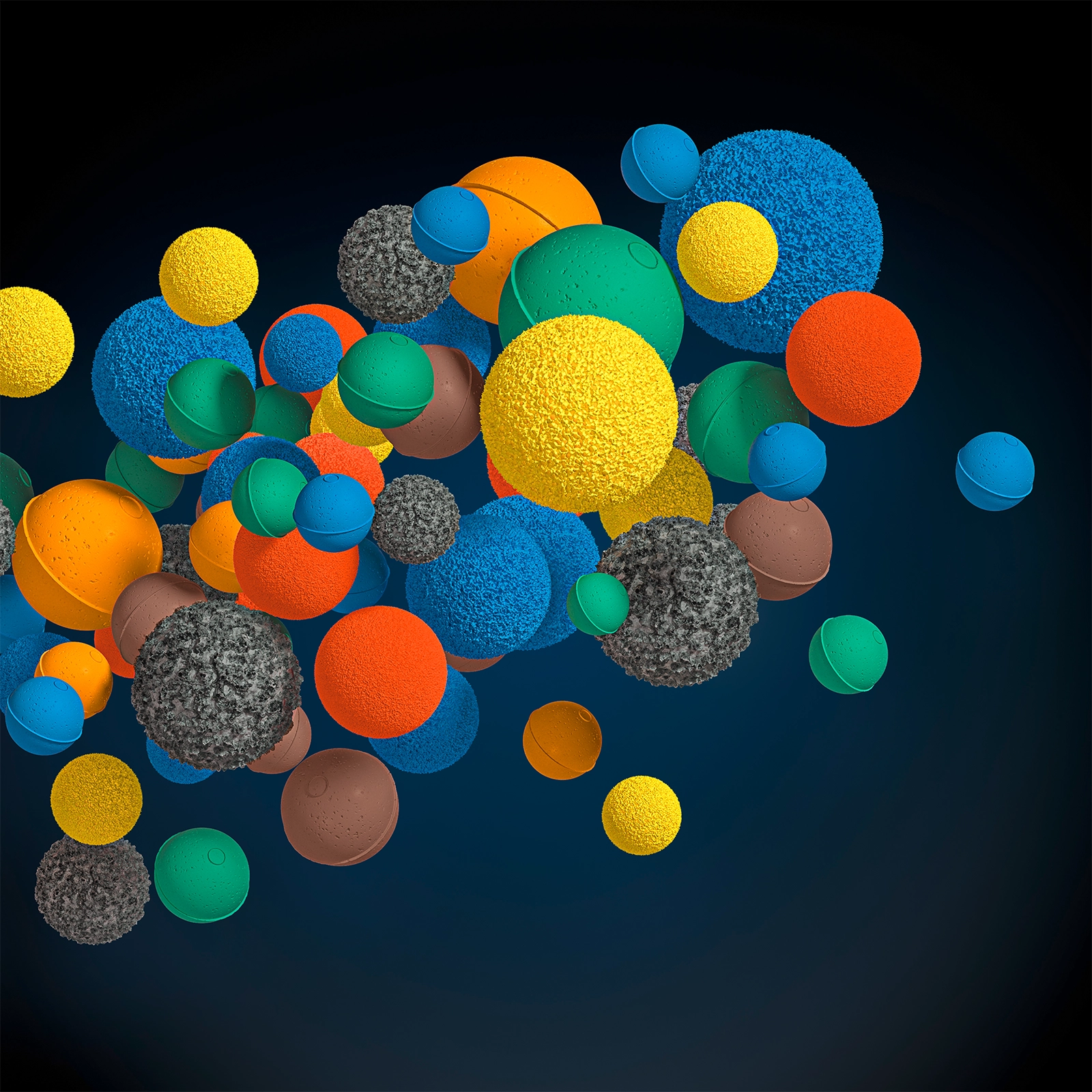
The Cleaning Balls are the key feature of the Taprogge System. Choosing the right ones is essential for successful cleaning. In the process, we take into account the tube material, water quality, hydraulic conditions, and specific type of fouling. To help get things rolling, we have divided our Cleaning Balls into three categories: sponge rubber balls, polishing balls, and coated balls. This provides a solid basis on which we will then build depending on the specific application.
Cleaning Particles
In self-cleaning Klaren Systems, Cleaning Particles form a fluidized bed in the upward-flowing medium. The scouring effect this produces keeps the heat transfer surfaces fouling-free, thereby ensuring a constantly high heat transfer rate. The material and geometry of the particles are selected on a project-by-project basis, as these parameters determine the cleaning performance and efficiency of the overall system.